Making Room
On silence, space, and tending what’s been overlooked

I stood in the doorway of my office and felt my mind seize.
The room wasn’t messy exactly, just overwhelming. Books piled on every surface. Boxes shoved into a corner. A cluttered desk that seemed to repel any attempt at order. Each time I tried to work on it, I hit the same internal wall and stopped.
This particular project began back in 2020, when we turned the guest room into a second office. Over time, the room became a mirror for something deeper than a backlog of home projects. It reflected the state of my inner life.
I see now that this pattern has roots going back much further.
In high school, when I lived alone for the first time, my room always looked like a tornado had gone through it, a phrase my family used often. I remember the day my mom came over and, exasperated, started cleaning it for me. She criticized me for spending all my time volunteering instead of taking care of myself.
I felt frustrated and ashamed. I wanted to show up for others and also know how to care for myself, but something in me didn’t yet know how to make room for both.
That same tension resurfaced decades later, during a period of extreme burnout in my adult life. It showed up each time I walked into the kitchen to make a meal. Three times a day, I felt anxious and overwhelmed. I could feel an intense pressure in my head, as if my mind were collapsing in on itself.

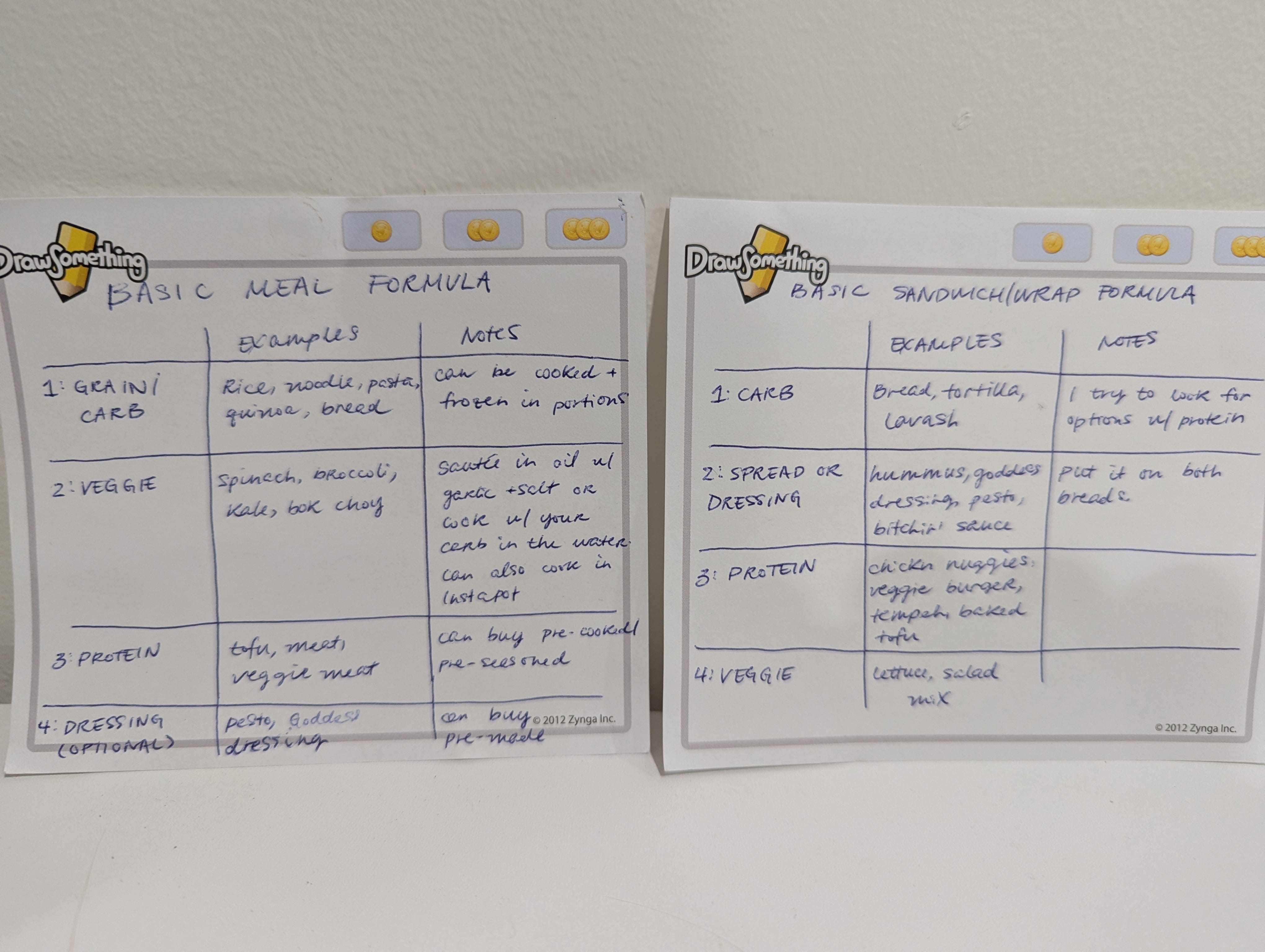
Each time I hit that wall, I fought back tears and thought, “Why can’t I do this? What’s wrong with me?” The question carried shame, but it also carried truth. Something needed to change. I didn’t want to live this way anymore.
For a time, I turned to one of my go-to survival strategies: avoidance. When I wasn’t working, I spent as little time in my office as possible. I felt a visceral aversion to even standing in the doorway. I also began relying on edibles every night after work to escape both physical and emotional pain. I grew attached to the numbness and the temporary relief it offered.
Avoiding my problems only gave them time to fester, like an untended wound. Eventually, I could no longer ignore the signs as my health, relationships, and work began to suffer. Something had to give.
The day I gave myself permission to stop working was the day I started showing up for myself.
I leaned on the wisdom of those farther along the healing path, allowing myself to be guided. I had spent a lifetime attuning to others and caring for their needs. Learning to redirect that attention inward turned it into a gentle, freeing superpower.
Over time, my mind began to feel more spacious as the internal pressure valve slowly released.
Around that time, a lyric I’d loved for years began to land differently:
“I’ve been setting aside time to clear a little space in the corners of my mind.”
What once felt aspirational started to feel literal, like a quiet description of what was already happening.
I worked on my office at a pace my nervous system could tolerate. I would add a piece of shelving or furniture, offer myself a small pat on the back, and then step away. In slowing down, I learned to trust the process. I knew the next spark of inspiration would bubble up after I had rested.
The natural rhythm of life, I’ve come to understand, isn’t unlike the rhythm of a silent meditation retreat. We alternate between sitting meditation and walking meditation, with spacious time for meals, learning, and service.
Rest.
Activity.
Rest.
Activity.
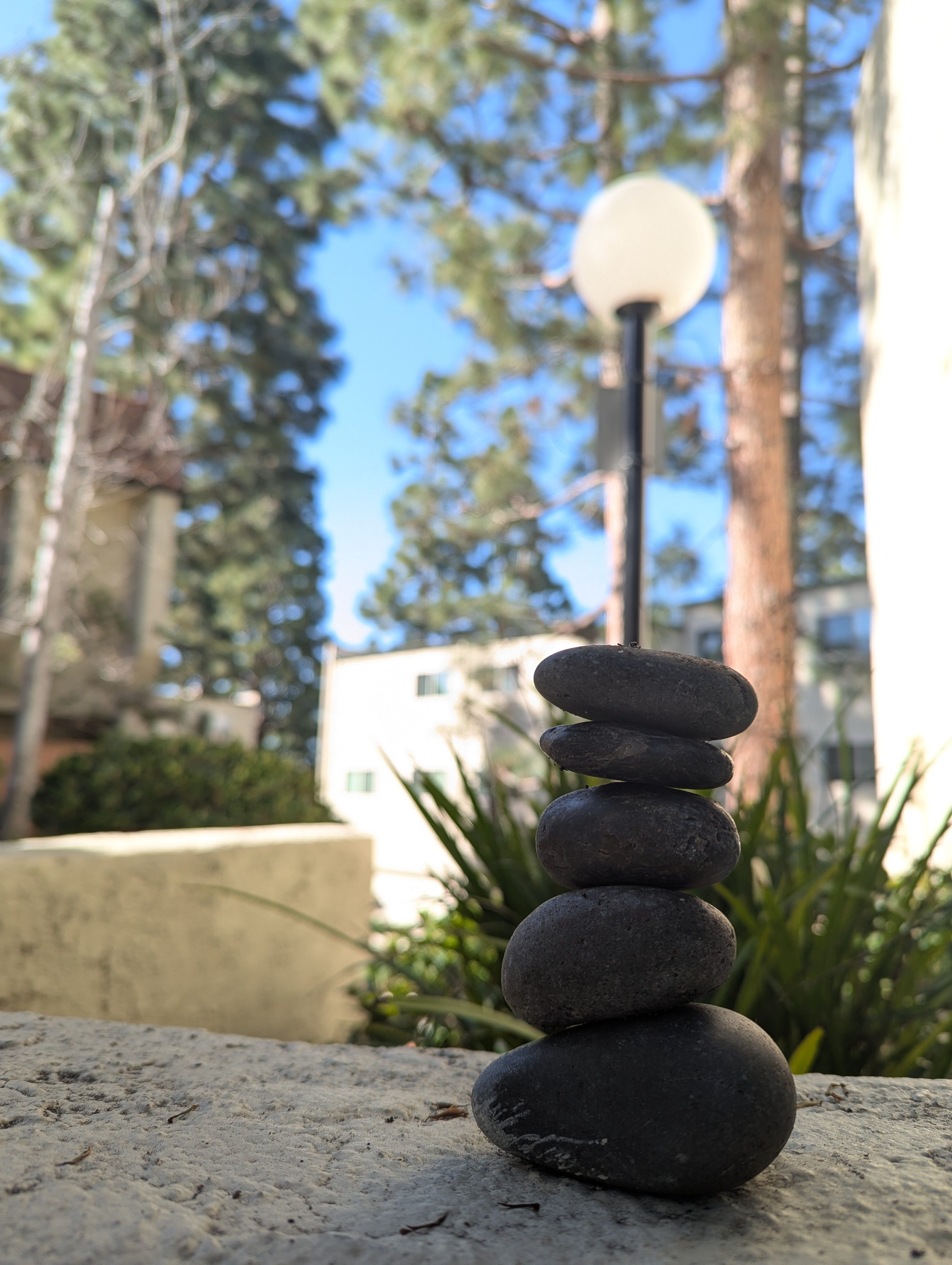
I now listen when my body signals that it needs rest, in part because I understand the cost of overriding those signals. I also listen because I trust that on the other side of rest, energy for activity will return.
Last week, I brought my retreat practice home through a hybrid silent retreat offered by the Insight Retreat Center. In preparation, I turned my office into a private meditation hall, finally finishing the setup that had stalled for years.
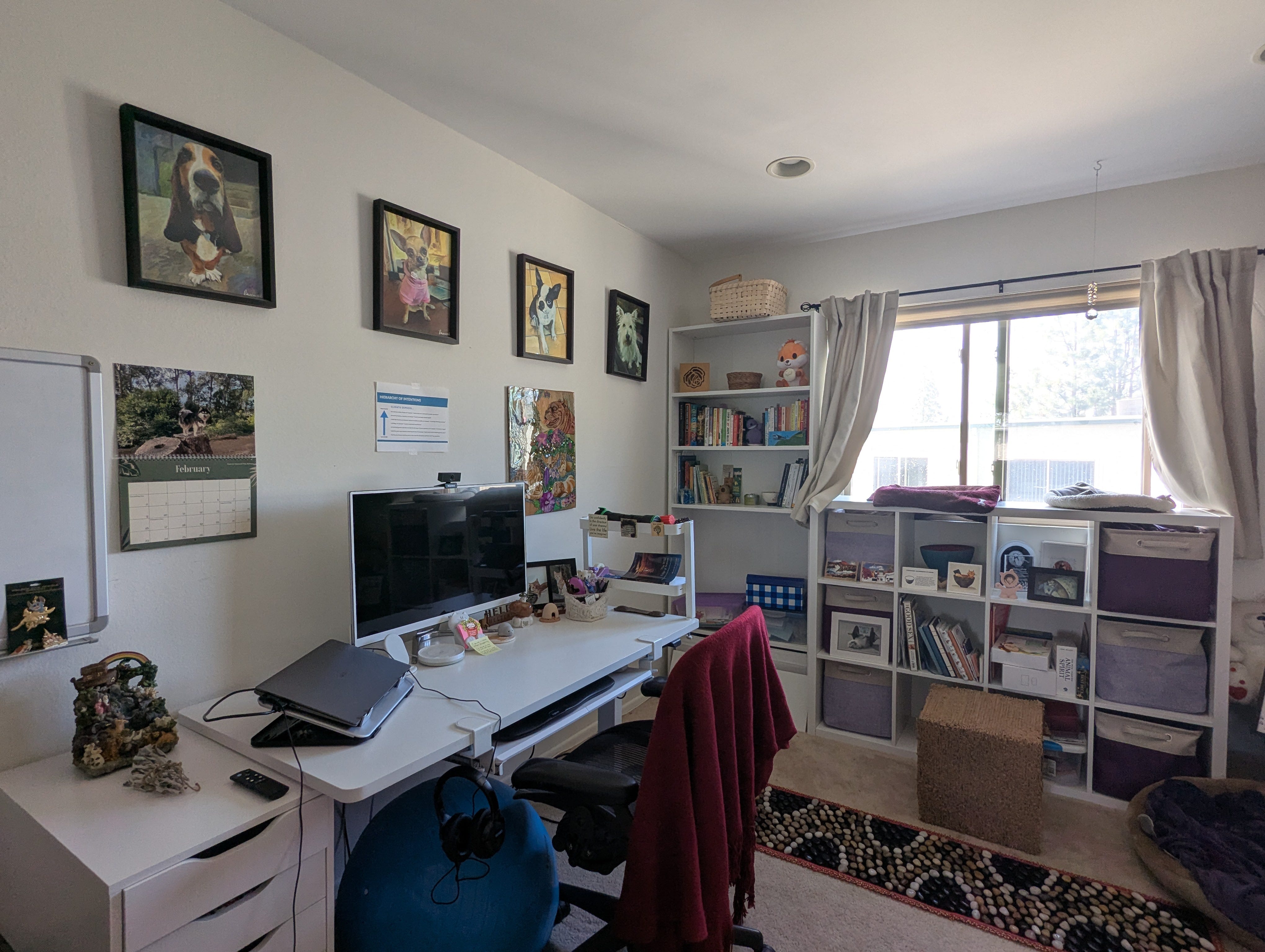
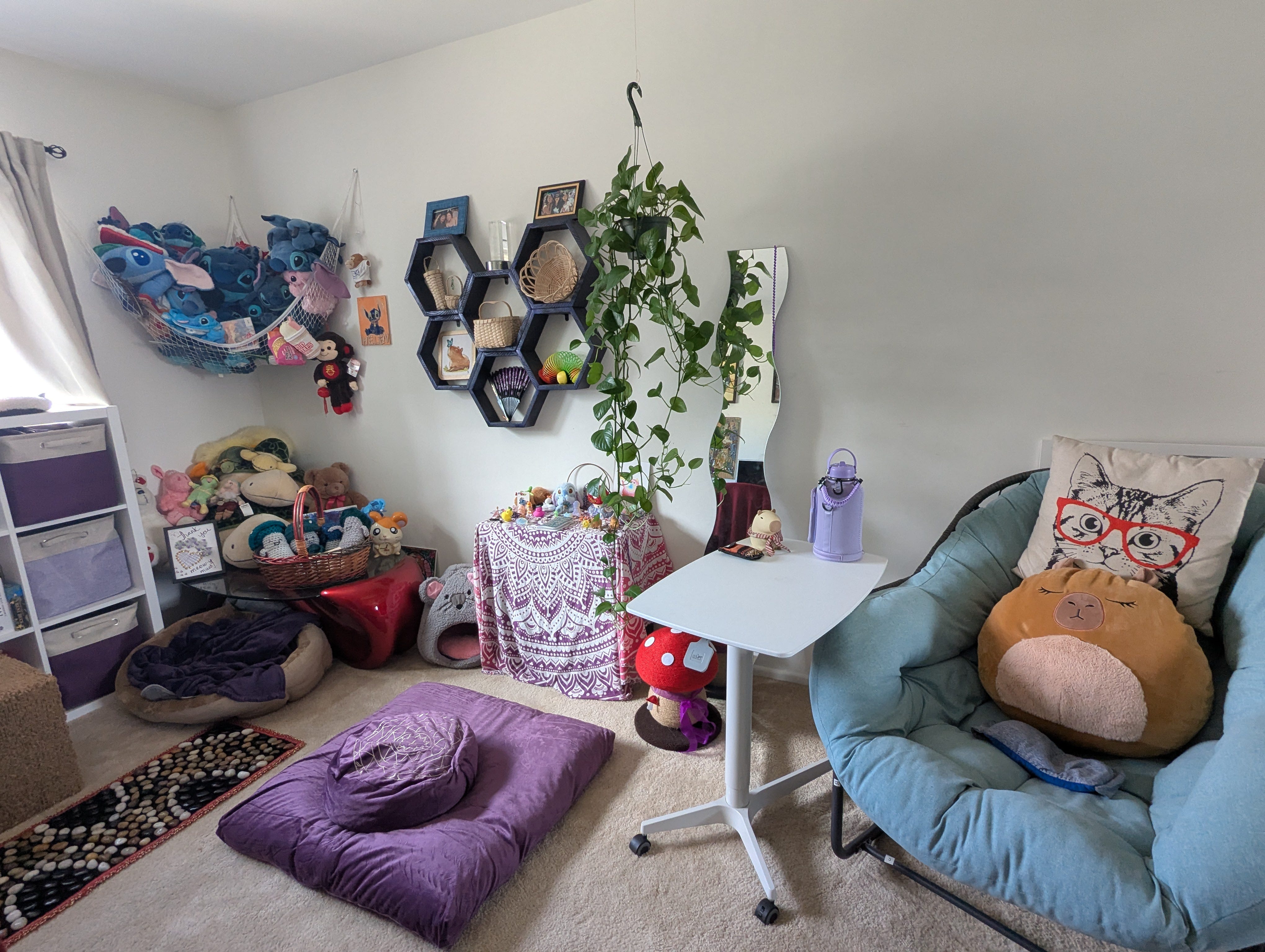
In bringing the retreat home, I slowed down and became more aware of the entire house. At in-person retreats, we all share responsibility for caring for and cleaning the space each day. Inspired by that rhythm, I began spending some periods of activity cleaning as I noticed the chronically overlooked areas of my own home.
For the first time in 15 years, I vacuumed the cobwebs throughout the house, including the garage. I felt loved and supported when my partner offered to help with the higher ceilings. I cleaned the vent hood above our stove, peeling away years of grease in one thick layer. Yuck.
I cleaned our master bathroom, including the toilet, something I usually avoid like the plague.
What’s funny is that on my last two in-person retreats, my sangha service job was to clean the women’s restroom toilets. For 20 minutes each morning, I did the work mindfully. Throughout the rest of the day, I noticed joy arise each time I returned to the restroom.
On previous retreats, I felt gratitude for the person with that job because the toilets were always so clean. This time, I felt that gratitude toward myself, along with pride in how my service cared for my fellow retreatants.
My home may never stay as immaculately clean as the retreat center, but it’s becoming far more comfortable as I continue to care for it day by day. I love spending time in my office now, a space I’ve curated with meaningful items, many of them gifted, that remind me how loved I am by both my community and myself.
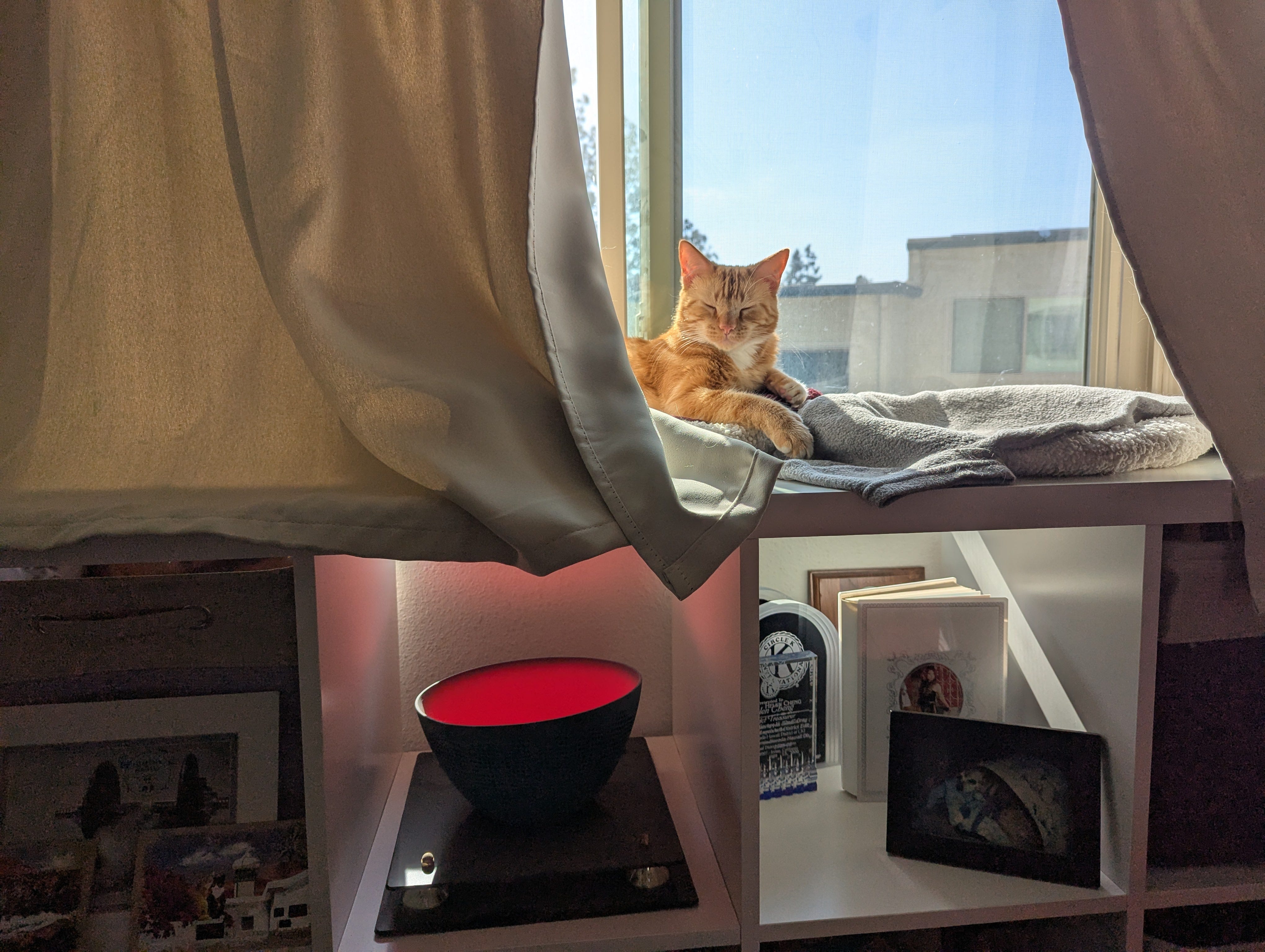
Just as I’ve been learning to slow down and notice my physical space, I’ve also been learning to slow down and notice my mental space through meditation. I once heard meditation described as art curation for the mind, and the image has stayed with me. Rather than trying to get rid of thoughts or force them into something more acceptable, I can notice what’s already here. I can decide what I want to linger with, what might be moved to the periphery, and what simply needs more space around it.
“The spacious mind has room for everything,” Ajahn Sumedho writes in Noticing Space.
What I’m learning is that spaciousness isn’t the absence of clutter, emotion, or difficulty. It’s the presence of enough room to be with what’s here without needing to fix or flee.
My office still has books. My house still gathers dust. My mind still gets crowded.
But the tornado has passed.
What remains is a livable landscape, one I can tend at a pace my nervous system trusts. I no longer enter with urgency or self-criticism.
I arrive with curiosity.
I make room.
And in that room, I stay.
Author’s Note
Thank you for visiting the art gallery of my mind. If you’ve enjoyed your stay and feel called to share some art from your own mind, I invite you to leave a comment with your reflections on this essay. If you feel inspired to learn more about or support my work, visit heldbyhelen.com/freelyheld.
This was a lovely and well-written,well thought out essay. And very timely! I’m clearing space for the new year(working with the Chinese calendar) and find myself releasing procrastination and indecision. Such meaning in the simplicity of living. Thank you for the gentle reminder.